Buying · 7 min read
How to read a diamond certificate
The four Cs are the part everyone knows and the least useful half of the page. Here is what we actually look at.
24 August 2026
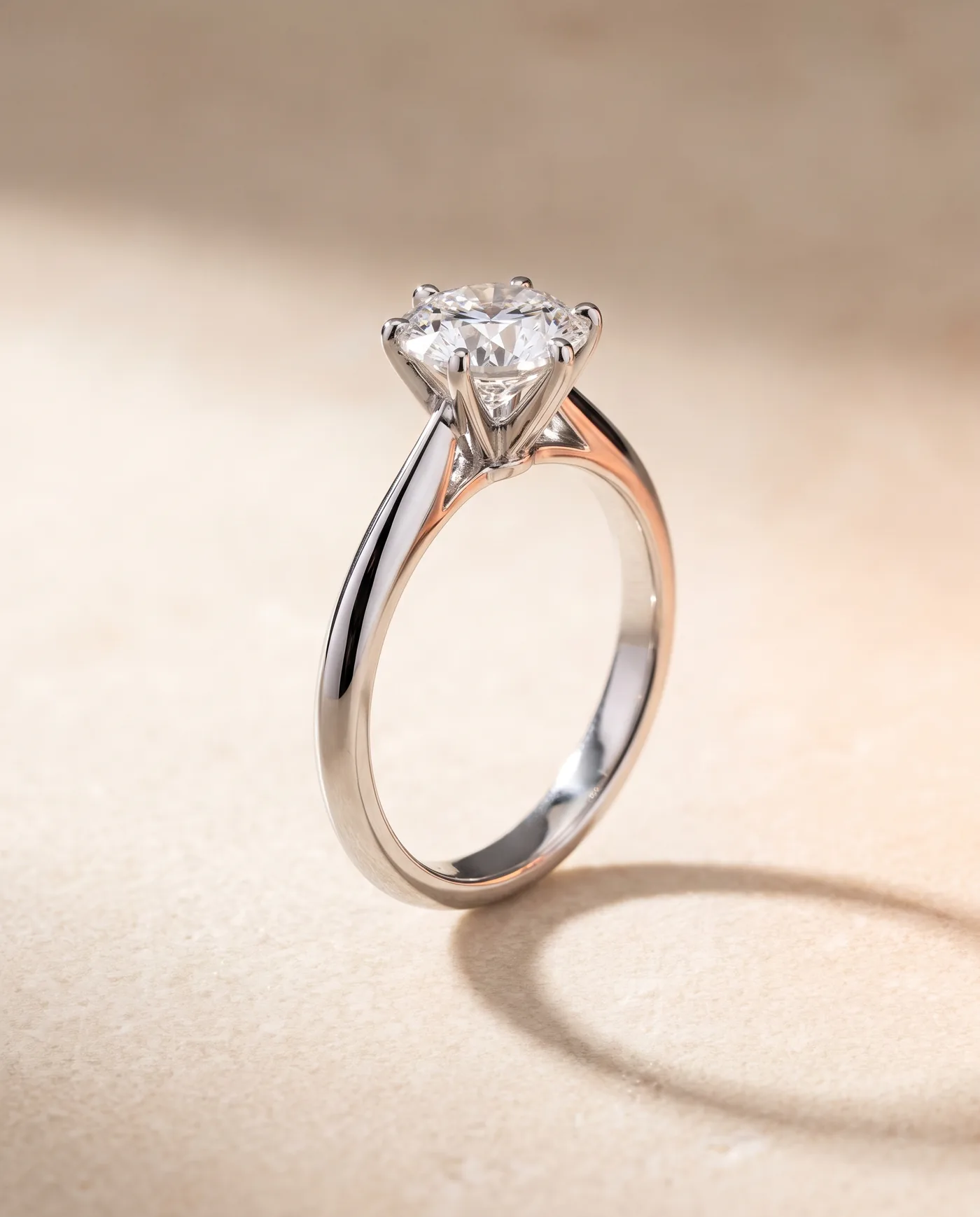
Every stone we set arrives with a report from a recognised laboratory — in practice GIA, occasionally AGS. The report is not a valuation and it is not a guarantee of beauty. It is a description, written to a standard, of what the stone is. Learning to read it properly is the single most useful hour a buyer can spend.
Carat is a weight, not a size
A carat is a fifth of a gram. It says nothing about how large a stone looks from above, which is what you actually see on a hand. Two 1.50ct stones can differ by more than a millimetre in diameter depending on how deep they are cut. A stone cut with a heavy pavilion hides its weight underneath, where nobody will ever look at it.
Look at the millimetre measurements before the carat weight. For a round brilliant, a well-cut 1.00ct stone measures about 6.4mm across. Materially smaller than that and you are paying for weight you cannot see.
Cut is the one that matters
Colour and clarity describe what a stone is. Cut describes what it does. It is the only one of the four Cs that is a judgement on human work rather than an accident of geology, and it has more effect on how a diamond looks across a room than the other three combined.
On a round brilliant, insist on Excellent cut with Excellent polish and symmetry. The premium is real and it is worth paying. On fancy shapes — pear, oval, emerald, marquise — the laboratories do not issue an overall cut grade at all, which is precisely why those shapes need to be seen in person rather than bought from a page.
Clarity: read the plot, not the grade
The clarity grade is a summary. The plotting diagram beside it is the actual information. Two stones can both grade VS2 while one has a single inclusion tucked under a crown facet and the other has a scatter across the table where you will see it every day.
We rarely recommend paying for Flawless. VS1 and VS2 are eye-clean in almost every case, and the money saved buys a materially better cut. The exception is emerald cuts, where the large open table gives inclusions nowhere to hide and a grade higher is genuinely worth it.
Fluorescence is not a flaw
Roughly a third of diamonds fluoresce blue under ultraviolet light. The trade has historically discounted them, which means medium fluorescence in a G–I colour stone is often the best value on the table — and in some cases the blue very slightly offsets a warm tint. Strong fluorescence in a D–F stone can occasionally cause haze; that one we do check by eye.
What the report will not tell you
It will not tell you how the stone behaves in candlelight, in an office, or against your skin. It will not tell you whether the pattern of light suits you. Two stones with identical reports can look quite different beside each other, which is why every commission here includes seeing three to five candidates loose, under the same light we intend to set them in.
The certificate tells you what you are buying. It cannot tell you whether you will love it.