Materials · 8 min read
Platinum, white gold, silver, titanium
Four white metals that look similar in a photograph and behave nothing alike on a hand.
27 July 2026
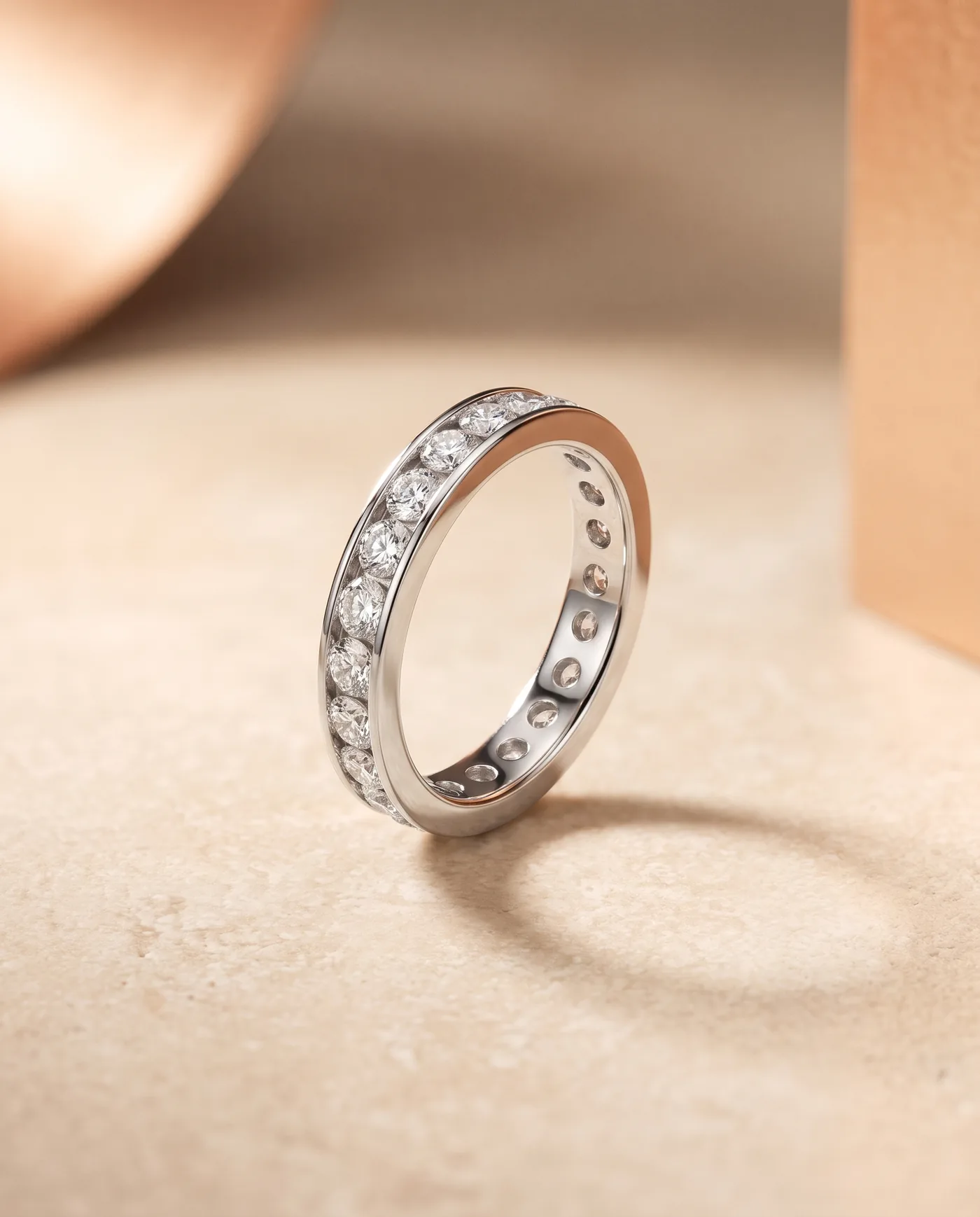
Most people choose a metal by colour and price. Those are the two least important variables. What actually determines whether you are happy in ten years is density, hardness, how the metal ages, and whether it can be repaired.
Platinum
The densest of the four and the most forgiving over a long life. Platinum does not wear away when scratched — it displaces, moving metal to the side rather than losing it. A platinum ring after thirty years has the same amount of metal it started with, just rearranged into a soft matte surface the trade calls patina. Polish it and it is new again.
It is also the best metal for holding stones, for the same reason: it deforms rather than fractures. Nearly every setting we make for an important stone is platinum, regardless of what the rest of the piece is made from. The downsides are weight, which some people dislike, and cost.
18k white gold
Yellow gold alloyed with white metals — usually palladium in the alloys we use — to produce a cool colour. It is lighter than platinum, harder on the surface, and less expensive.
Two things to know. First, it is not truly white; it retains a faint warmth, which is why most white gold is rhodium plated. That plating wears through in one to three years on a ring and needs redoing. We prefer palladium white alloys, which are white enough to leave unplated, so there is nothing to wear off. Second, unlike platinum, when white gold scratches the metal is genuinely gone.
Sterling silver
Soft, bright, and by far the most affordable. It tarnishes — that is a chemical reaction with sulphur in the air, not damage, and it polishes off in seconds. What matters more is that silver is genuinely soft: a silver ring worn daily will lose its crisp edges within a few years.
That makes it a poor choice for a piece under constant abrasion and an excellent one for bracelets, collars and earrings, where it can be made substantial without becoming unwearably heavy or expensive. Everything we make in silver is hand-raised, which work-hardens it considerably.
Titanium
Extremely hard, extremely light, completely hypoallergenic, and nearly impossible to scratch. It holds an engraved line better than any precious metal, which is why our signet is cut in it.
The catch is that its virtues are also its limitations. Titanium cannot be soldered with conventional techniques, cannot be resized, and cannot easily have a stone reset. It is the right answer for a solid form that will never need altering, and the wrong answer for anything that might.
A short version
Important stone, worn daily, meant to be inherited: platinum. Cool colour with less weight and cost: 18k palladium white gold, unplated. Substantial sculptural pieces: sterling silver. Something indestructible that will never need changing: titanium.